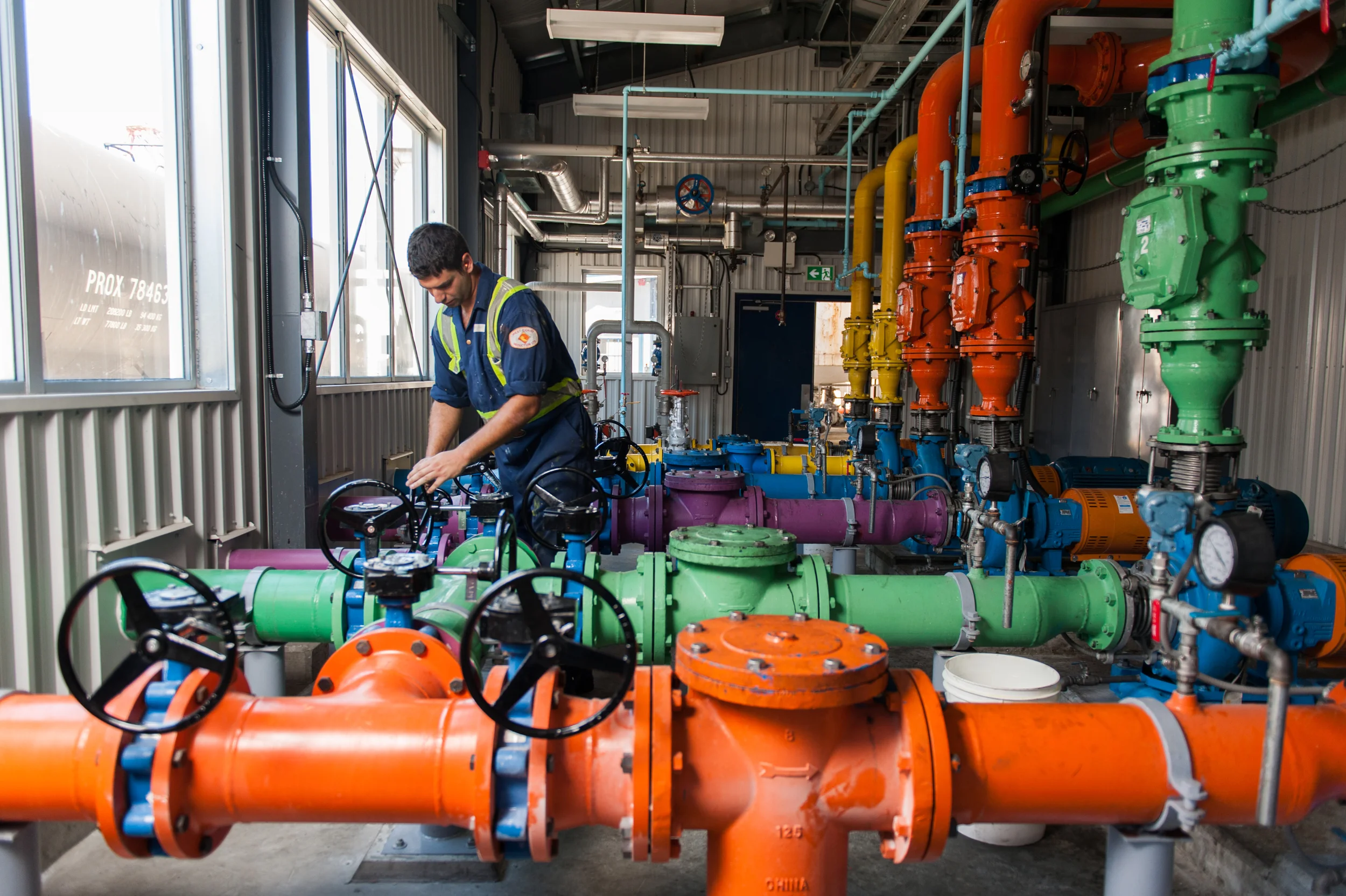
Rendering is an essential part of the human food chain.
When asked, few urban dwellers have any idea about
rendering and how necessary
rendering is in securing a healthy, high standard of
living in an urban
environment.
The reason so little is known about
rendering is that until as recently as seventy years
ago, before migration from rural areas to the cities
accompanied by unprecedented population growth resulted in
the demise of the family farm, most people acquired their
poultry, meat and fish products directly from a farmer,
butcher or fishmonger. Family butchers and fishmongers
sourced their supplies from relatively small producers.
These producers were mainly, farmers, fishermen and small
abattoirs for whom
disposal of unwanted fish and animal waste by-products
was not a problem.
Up until the early twentieth century, protein for human
consumption was scarce. When a creature was killed for
human consumption, no part of the creature was allowed
to go to waste. Any fat or protein, including what we
now regard as trimmings and offal, which could be eaten,
was eaten. What was left over was boiled down, or
rendered, to produce stock, lard and
tallow. What could not be used was fed to the pigs
and chickens.
From this brief history it can be seen that
rendering has been with us since the beginning of
time.
Modern
rendering evolved as farmers expanded their
livestock production to supply abattoirs which in turn
expanded their production to supply butcher shops which
in turn expanded their production to supply
supermarkets.
As cities grew and meat products became more abundant,
consumers demanded better meat cuts. Unwanted
by-products such as fat, offal and blood had to be
disposed of as they could not be buried in the urban and
suburban
environments where many abattoirs were located. As a
result, many abattoirs acquired their own batch cookers
which were developed to render and reduce these
by-products. The resulting
finished products, meat and bone meal and tallow
were then sold for use as ingredients in the manufacture
of animal feed, fertilizers and soap.
With the evolution of meat and fish processing and with
the increase in volumes handled by processors,
by-product
disposal became difficult for processors. The
difficulties experienced by processors gave impetus to
the growth of specialist independent renderers serving
the needs of many processors.
At first,
rendering was not regarded as a particularly
attractive business because of its physical aspects such
as unsophisticated cooking equipment, the absence of
even the most rudimentary odour abatement equipment, the
hot and harsh working conditions surrounding a batch
cooker and the nature of the raw material. Among
industry participants,
rendering was often referred to as the silent
industry.
However, with specialization came sophistication and
efficiency. Small independent renderers consolidated
their operations. Batch cookers were replaced with
continuous
rendering systems operated by skilled personnel
using state of the art computerized operating control
systems and
regulatory requirements governing
air,
water and the
environment were introduced.
Today's independent renderers operate
plants designed to process increasingly large
volumes of
raw materials received from a variety of sources
including farms and feedlots, butcher shops,
supermarkets, restaurants, fish, poultry and meat
processors.
Raw materials derived from different species are
rendered in different processing lines and plants.
Fleets of trucks move
raw materials from their respective sources on a
daily basis and the nation's food supply is secured as
renderers across the country recycle approximately
two hundred and fifty thousand tonnes of animal
by-products each year.

Rendering has come a long way. It is
recycling in the best sense of the word. Everything is
used. Finished products
are organic. Government grants and subsidies are not
required to support the industry and the industry creates
valuable long-term employment while sustaining the
environment. Although the
rendering industry is seldom properly understood, the
necessary role it plays in our lives soon becomes apparent
if we take the time and trouble to learn about it and
consider the alternatives.
|